 Coco's Nest
Places 9 min readChecked September 2026
10 places to visit in Goa: what each costs, and when to go
Opening times, entry fees, how to get there and when each one is actually open. Two are closed for part of the year.
Beaches
Both are in South Goa, where the bays are quieter and the shacks close earlier than in the north.
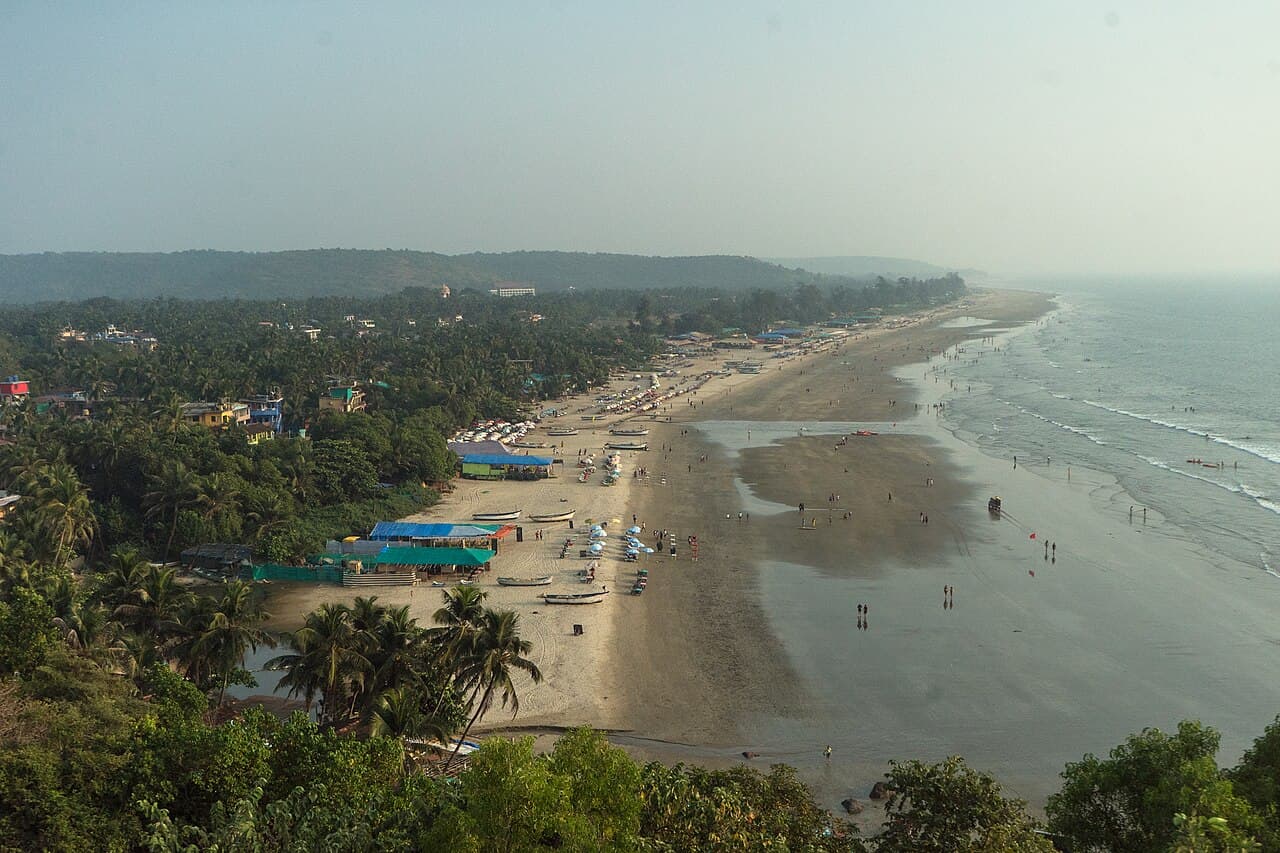
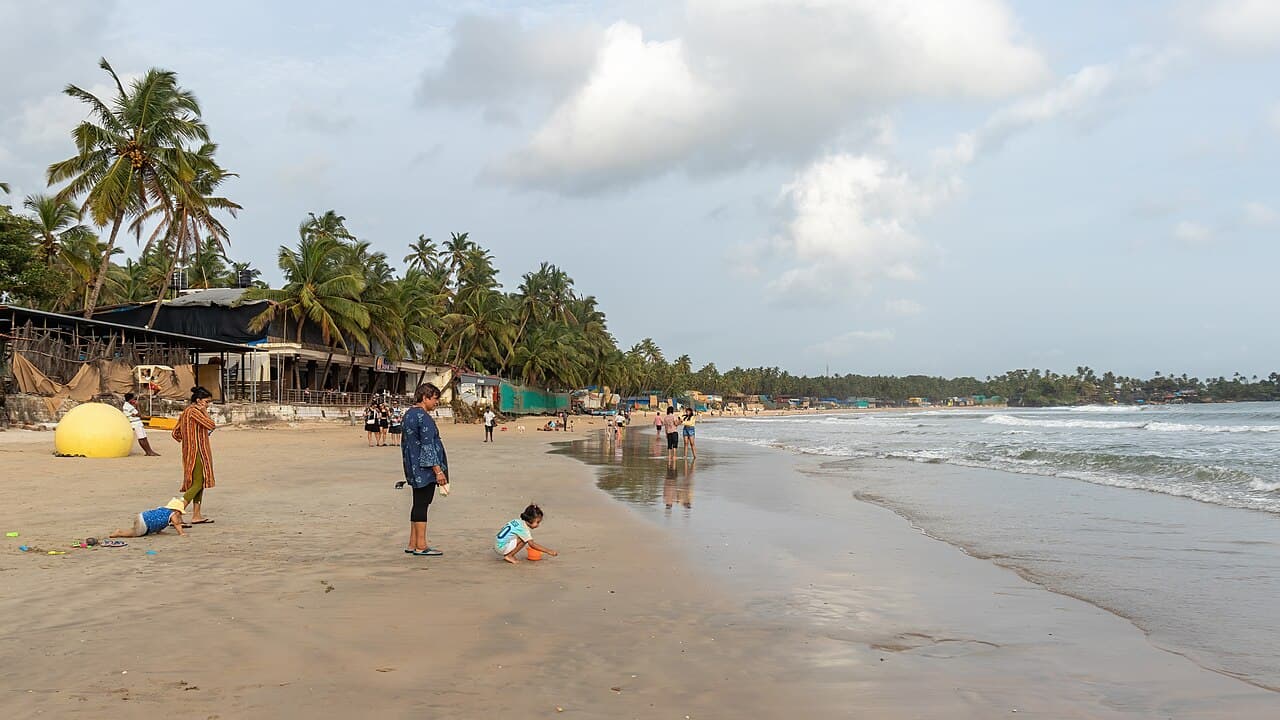
Photo: iMahesh, CC BY-SA 4.0 1Palolem
Canacona, South Goa
SwimmingFamiliesKayakingA crescent of sand with headlands at both ends. South Goa's pace is slower than the north's, and the shacks close earlier.
Palolem is the most developed beach in the south and still quieter than anything comparable in the north. The bay is sheltered at both ends, which makes it one of the few places where swimming is usually calm.
- Time needed: A full day, ideally a night
- Best time: November to March, when the shacks are up
- Getting there: About 2 hours from Panjim; Canacona station is the nearest railhead
Good to know
Roughly two hours from north Goa by road. Worth a night rather than a day trip.
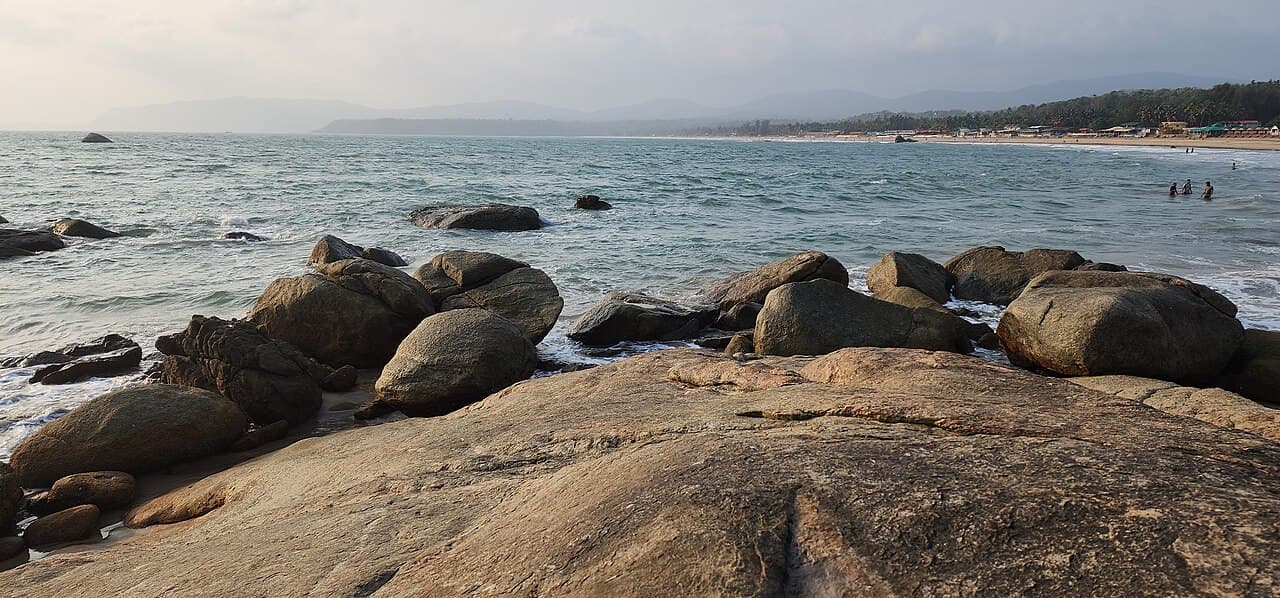
Photo: JosephAssisFernandes, CC BY-SA 4.0 2Agonda
Canacona, South Goa
Quiet beachesLong walksYoga retreatsThree kilometres of open sand with no road running along it, and a turtle nesting site at the southern end.
Agonda is what Palolem was before Palolem became busy. There is one lane behind the beach, the shacks are spaced out, and there is no through-road along the sand.
- Time needed: A full day
- Best time: November to March
- Getting there: About 15 minutes north of Palolem
Good to know
Swimming here is less sheltered than Palolem. Watch the flags rather than the other swimmers.
Heritage
Portuguese forts that guarded the river mouths, the churches of Old Goa, and Panjim's old Latin quarter.
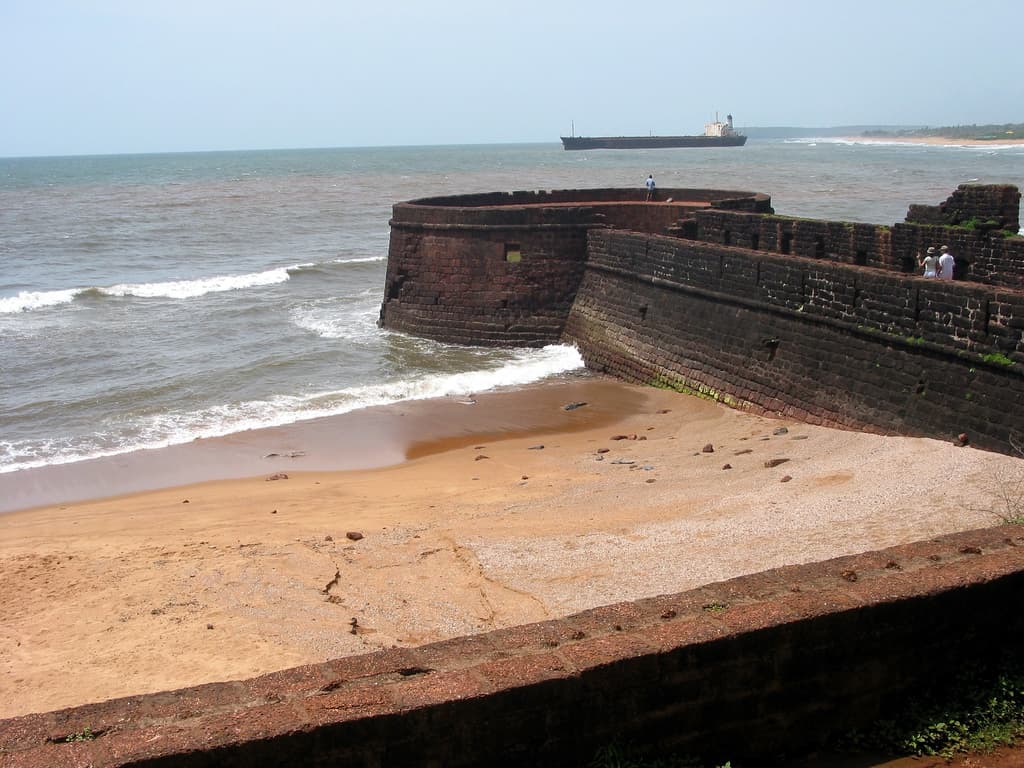
Photo: Nanasur at English Wikipedia, CC BY-SA 3.0 3Fort Aguada
Candolim, North Goa
HistorySunset viewsPhotographyA Portuguese sea fort from the 1600s, built to keep the Dutch out and still holding the best view of the coastline north of Panjim.
Aguada was built to hold fresh water and a garrison at the mouth of the Mandovi, and it did both for three centuries. What survives is the seaward bastion and the lighthouse above it, which is the part most people photograph without going in.
- Time needed: 1 to 1½ hours
- Timings: 9:30 am – 6:00 pm, daily
- Entry: Fort free · lighthouse ₹25 (Indian) / ₹300 (foreign national)
- Best time: Late afternoon, for the light and the temperature
- Getting there: About 20 minutes from Calangute; the last stretch is a steep, shadeless walk from the car park.
Good to know
Free to enter. The lighthouse is ticketed separately and closes earlier than the fort.
Source: Goa Tourism: Fort Aguada

Photo: iMahesh, CC BY-SA 4.0 HistoryArchitectureFamiliesWhat is left of a city that was once larger than Lisbon. Both churches are part of the UNESCO-listed Churches and Convents of Goa.
Old Goa was the colonial capital until malaria and cholera emptied it in the seventeenth century. The population left; the churches, built in laterite and lime, stayed.
- Time needed: About 2 hours for both churches
- Timings: Basilica 9:00 am – 6:30 pm; from 10:30 am on Sundays
- Entry: Free
- Best time: Early morning, before the coach groups
- Getting there: 10 km east of Panjim, 25–30 minutes by road; frequent buses from the Panjim stand
Good to know
Free. Shoulders and knees covered, and mornings are both cooler and far emptier.
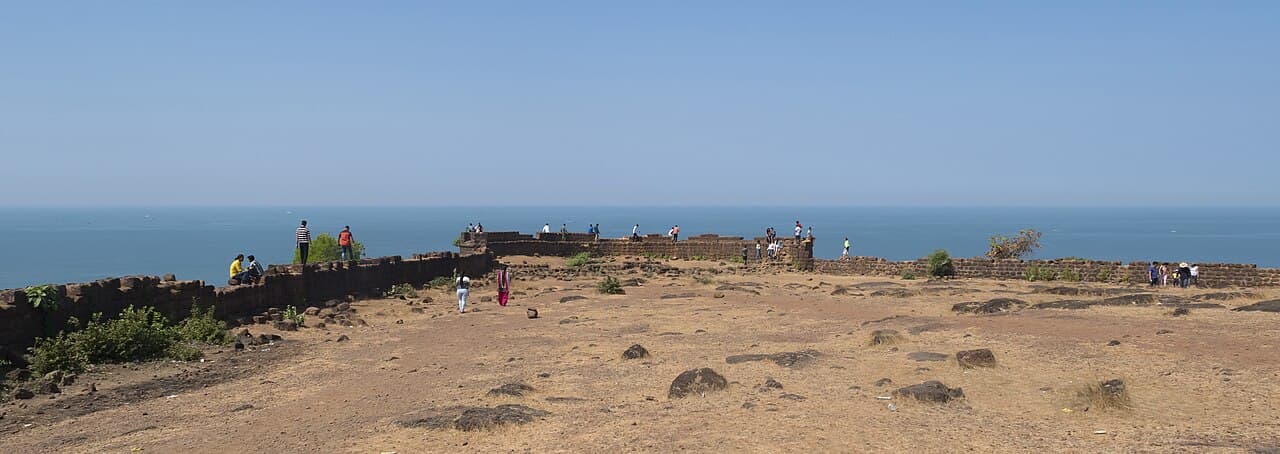
Photo: Nikhilb239, CC BY 3.0 5Chapora Fort
Vagator, North Goa
ViewsSunsetPhotographyA ruin on a headland with the best view of the northern coast, and a steep ten-minute climb to earn it.
There is not much fort left: laterite walls, a few bastions, no roof. What there is instead is the position: Vagator on one side, the Chapora river on the other.
- Time needed: About an hour
- Entry: Free
- Best time: Late afternoon
- Getting there: Ten-minute climb from Chapora village; no vehicle access to the top
Good to know
Free, unlit and unstaffed. Bring a torch if you are staying for sunset.
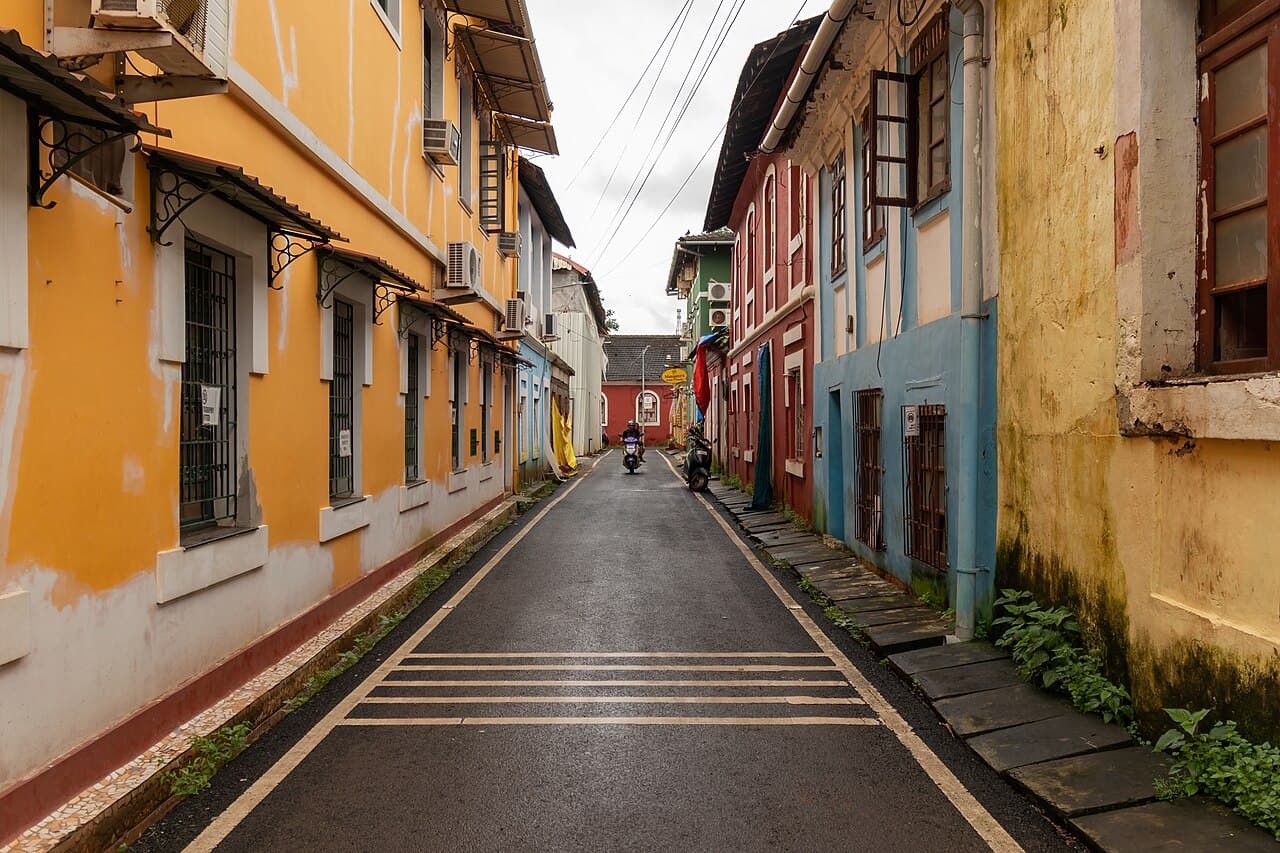
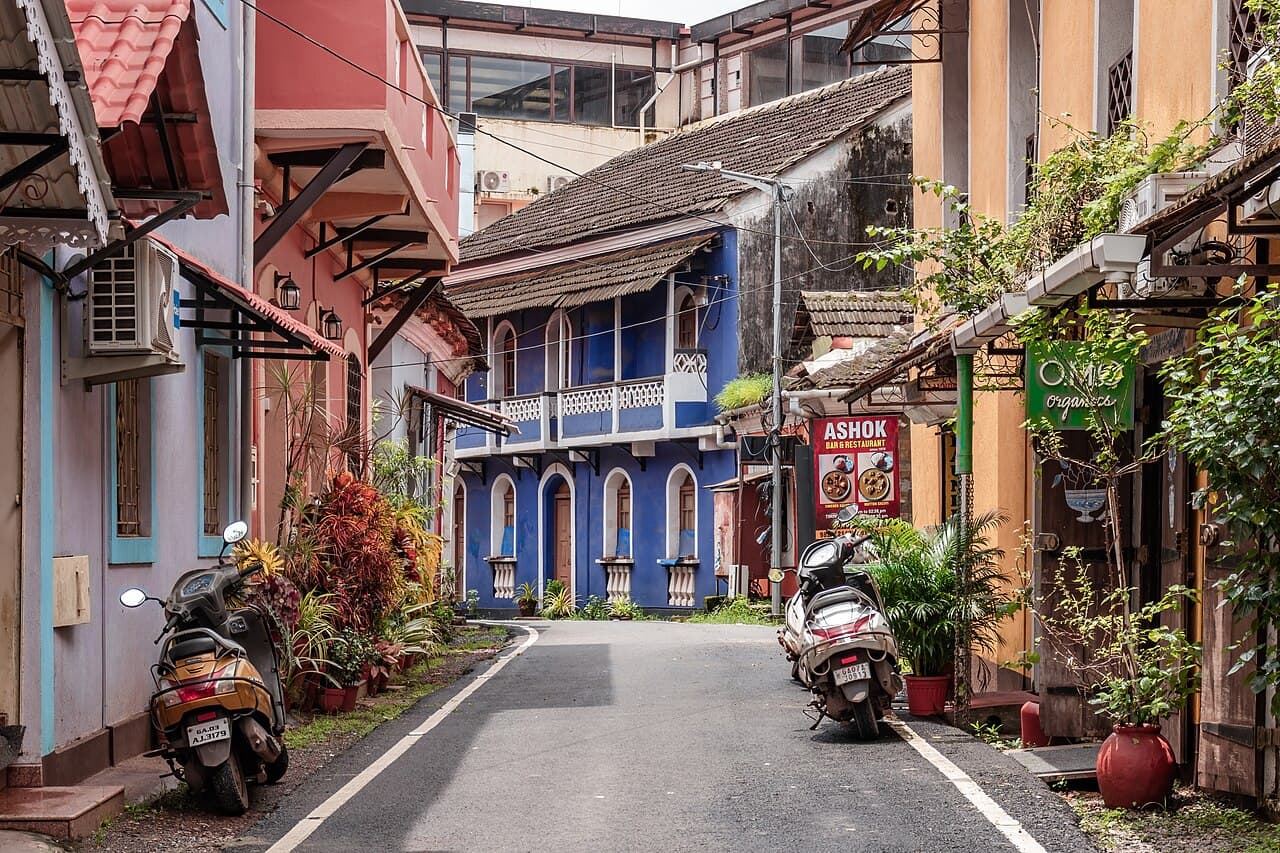
Photo: iMahesh, CC BY-SA 4.0 6Fontainhas
Panjim, Central Goa
WalkingArchitectureCafesThe Latin Quarter: narrow lanes of ochre and blue houses, best seen on foot and early.
Fontainhas is a working neighbourhood rather than a preserved one, which is why it is worth walking. The colours are maintained under local rules, and the houses are lived in.
- Time needed: 1 to 2 hours on foot
- Entry: Free
- Best time: Before 10 am
- Getting there: Walkable from the Panjim bus stand
Good to know
Free to walk. People live here, so keep out of doorways and ask before photographing anyone.
Nature
A waterfall inside a wildlife sanctuary, a river island reached by ferry, and a forest in the far south.
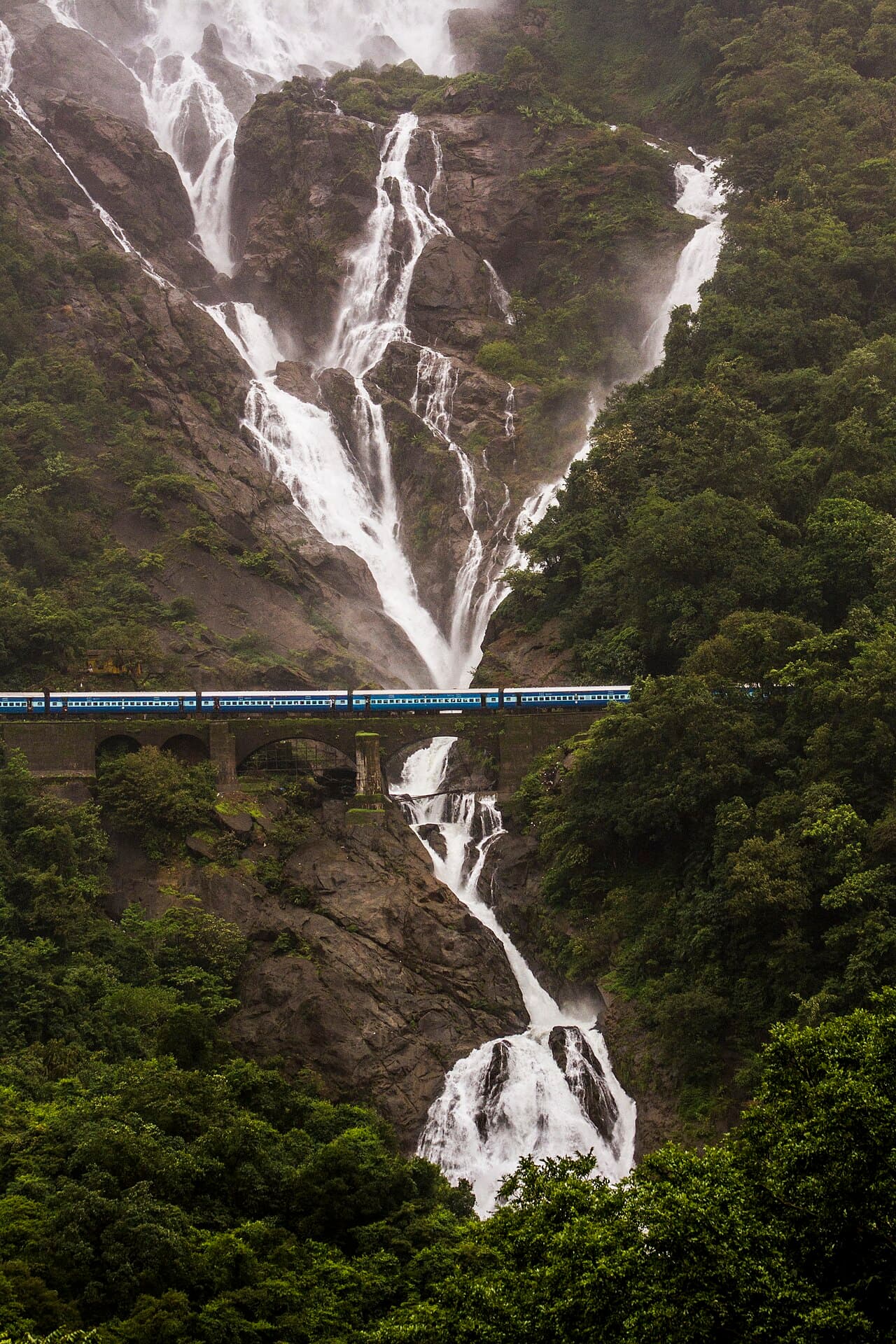
Photo: Hsp wiki, CC BY-SA 4.0 7Dudhsagar Falls
Mollem, South Goa
NatureAdventureWaterfallsFour tiers of water down a cliff face inside the Bhagwan Mahavir Wildlife Sanctuary, at its most absurd just after the rains.
Private vehicles cannot reach the falls. Access is by forest-department jeep from Kulem, booked on the day, and the track is rough enough that the ride is part of the experience rather than a transfer.
- Time needed: Half a day, including the jeep ride
- Best time: October to early January (full water, and open)
- Getting there: On the Karnataka border. Switch to a forest-department jeep at Kulem; private cars are not permitted beyond it.
Good to know
The jeep safari is suspended during the monsoon and usually reopens around October. When the falls are fullest, they are also closed.
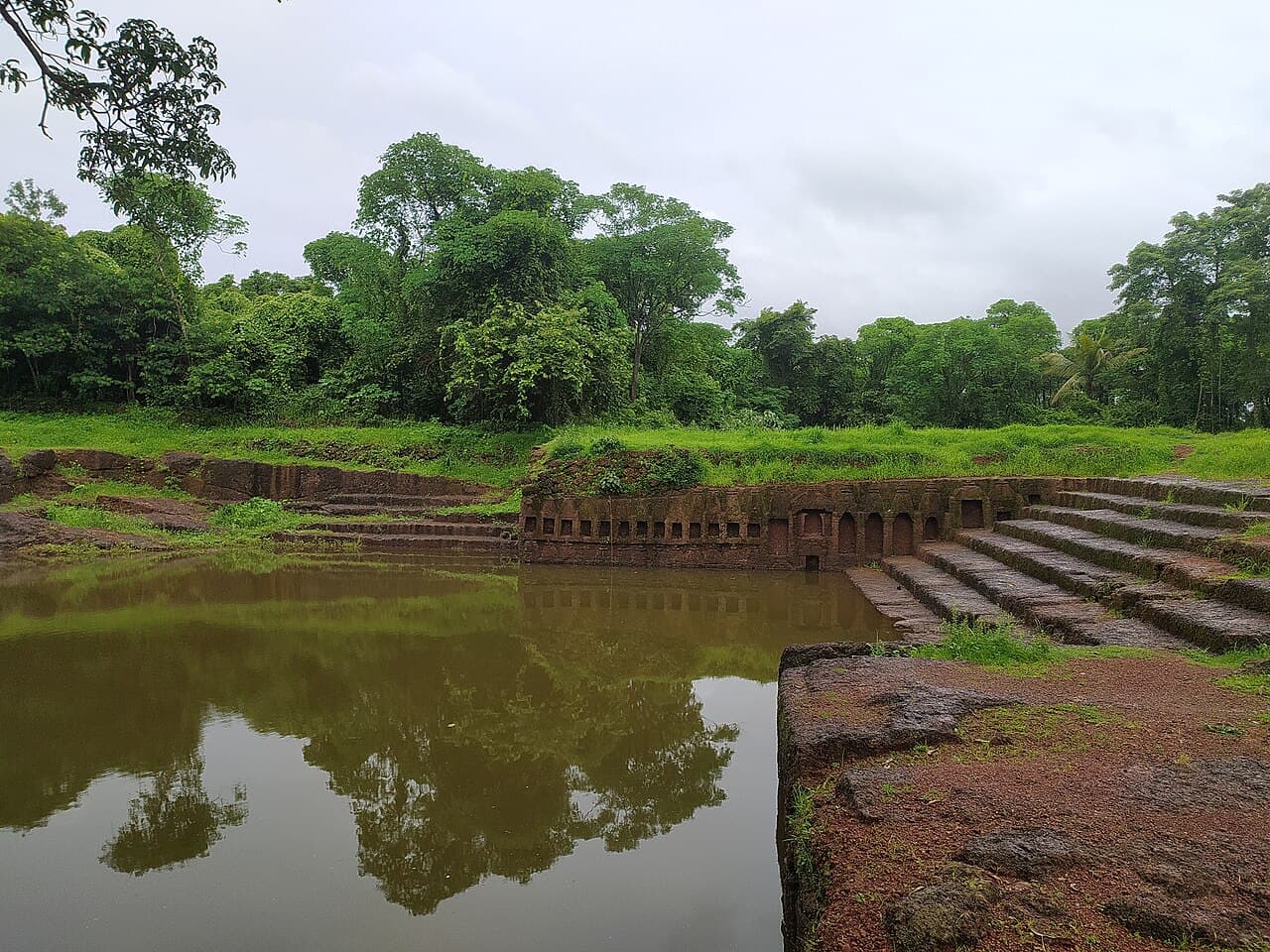
Photo: NICOLE CUNCOLIM, CC0 8Divar Island
Tiswadi, Central Goa
Slow travelCyclingVillage lifeA river island of empty lanes, old Portuguese houses and almost no traffic. The free ferry across is half the point.
Divar is ten minutes from Old Goa and feels an hour away. There is no through-traffic because there is nowhere to pass through to: the island is the destination.
- Time needed: 2 to 3 hours
- Entry: Ferry free
- Best time: Morning, before the heat
- Getting there: Ferry from Old Goa; takes foot passengers and two-wheelers
Good to know
The ferry carries scooters and is free. Check the last crossing before you go over.
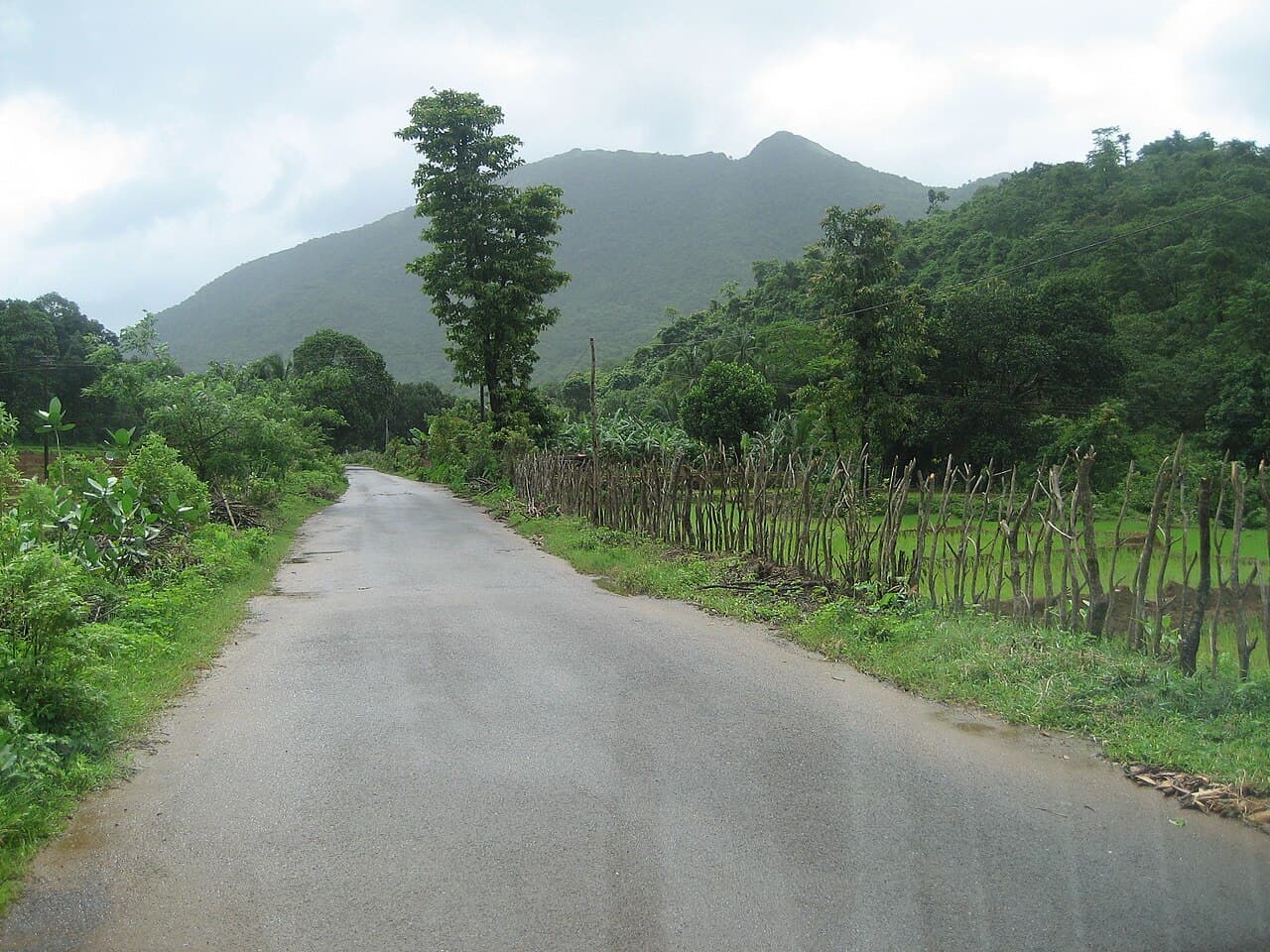
Photo: Paul778899, CC BY-SA 4.0 9Cotigao Wildlife Sanctuary
Canacona, South Goa
BirdwatchingEasy trailsNatureDry deciduous forest with marked trails and a canopy watchtower, half an hour inland from the southern beaches.
Cotigao is quiet, low-key and almost never crowded. The trails are marked, the terrain is easy, and the watchtower over a waterhole is the reason most people come.
- Time needed: Half a day
- Best time: Early morning, October to March
- Getting there: About 30 minutes inland from Palolem
Good to know
Entry is ticketed and the sanctuary closes well before dark. Confirm timings locally before driving out.
Markets & nightlife
The north's best-known flea market, and the village beside it.
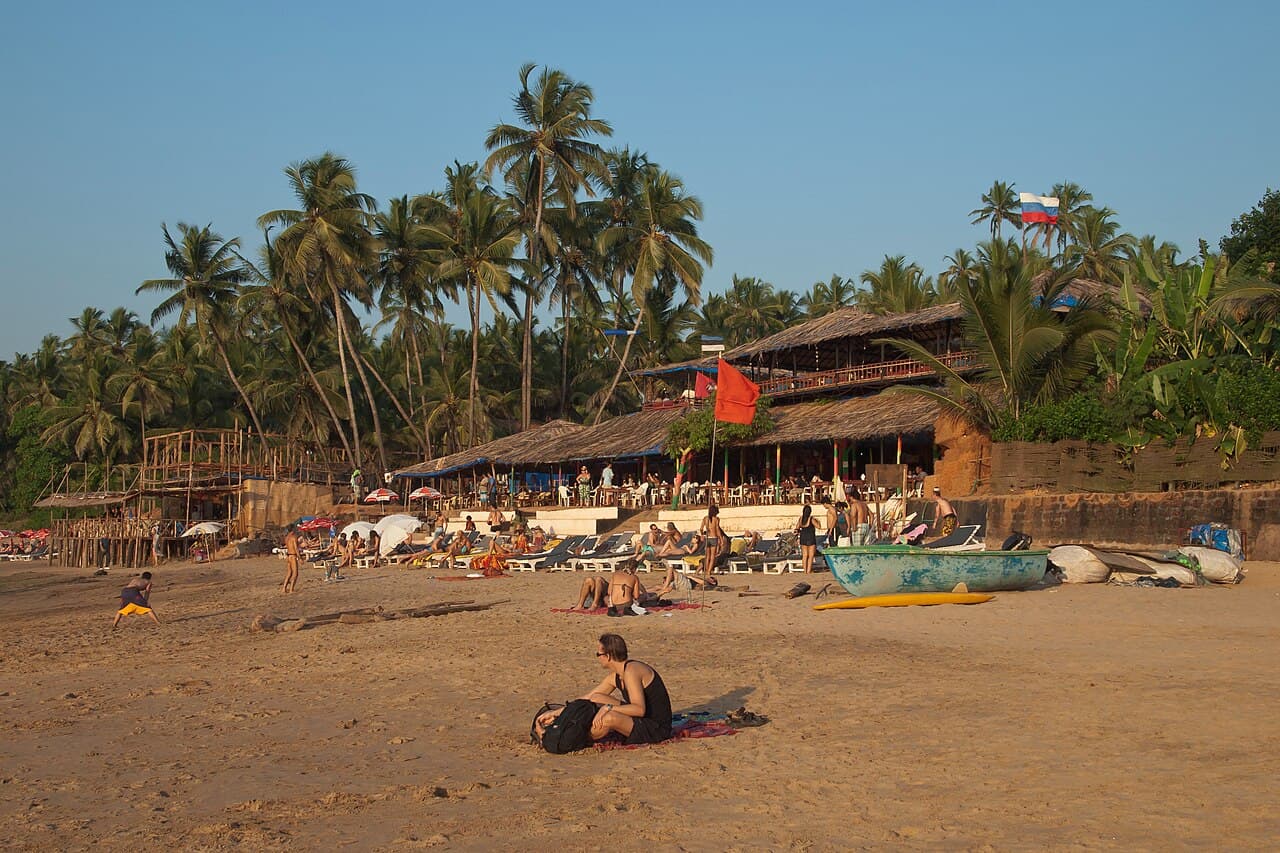
Photo: Vyacheslav Argenberg, CC BY 4.0 10Anjuna & Assagao
North Goa
ShoppingFoodNightlifeThe Wednesday flea market, and a village next door that has quietly become the best eating in the state.
Anjuna's flea market runs on Wednesdays through the season and is now more souvenir than counterculture, but the setting above the rocks is still worth an hour.
- Time needed: Half a day (a Wednesday, for the market)
- Timings: Anjuna flea market: Wednesdays, roughly 9 am – sunset, in season
- Best time: Season, for the market. Any time, for Assagao
- Getting there: 15 minutes from Calangute; parking near the market is difficult after midday
Good to know
The market runs roughly October to April. Assagao is year-round; book a table.
Frequently asked questions
How many days do you need for these?
Four covers the north comfortably. The southern entries (Palolem, Agonda, Cotigao) sit two hours from the northern beaches, so treat them as an overnight rather than a day trip; driving down and back in one day costs you the best hours at both ends.
Which of these are closed part of the year?
Dudhsagar's jeep safari is suspended for the monsoon and usually reopens around October, so the falls are at their fullest exactly when you cannot reach them by road. Anjuna's flea market runs roughly October to April. Beach shacks are taken down before the rains and rebuilt afterwards.
Can you do all of this on a scooter?
Most of it. The southern entries are a long ride and the Dudhsagar approach is not permitted to private vehicles at all. Helmets are required in Goa for the rider and the pillion, and a rental should carry a black-on-yellow commercial plate; a white private plate means it is not licensed to be rented to you.
Are these entry fees current?
The ones shown were checked in September 2026 and are dated on the page. Fees and timings change without notice, so treat them as a guide rather than a guarantee, and confirm anything ticketed before a long drive. Where we could not verify a figure we have left the field out rather than guessing at it.
The Cocosnest team · facts checked September 2026. Timings, fees and venues change without notice, so confirm before a long drive.
Places in this guide
Reviews & comments
No comments yet. Be the first.
Reviews open soon.