 Coco's Nest
Planning 10 min readChecked September 2026
Where to stay in Goa: every area, explained
Where you sleep in Goa decides most of what you will do, because the state is much larger on the road than on the map. These are the ten areas most visitors choose between, with the downsides left in.
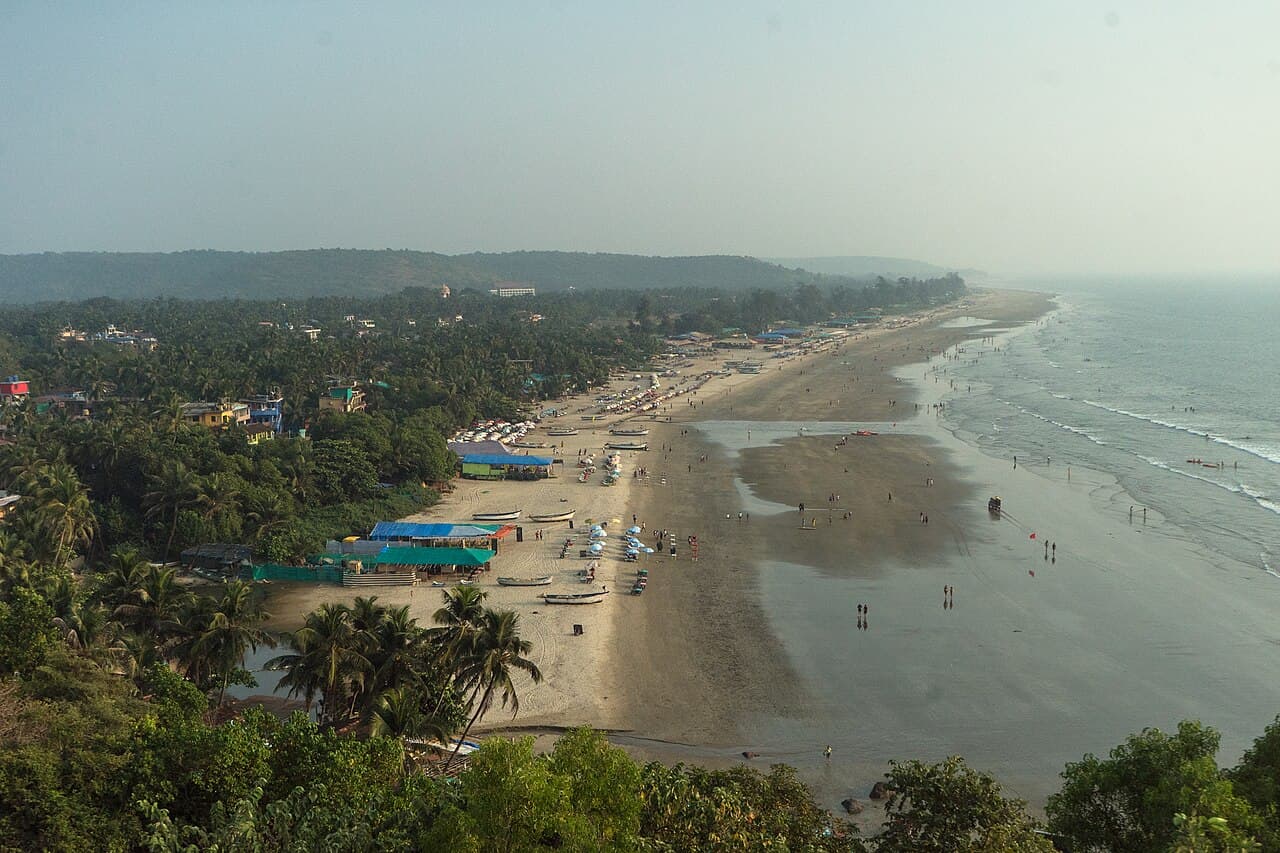
The short version of the north–south question: North Goa, from Candolim up to Arambol, is where the crowds, the nightlife and most of the restaurants are, and it is closest to Mopa airport. South Goa, from Colva down to Palolem, is quieter, more spread out and earlier to bed, and it is closer to Dabolim. Panjim sits in between. The drive from the far north to Palolem is around three hours in traffic, so picking the wrong end is hard to fix once you have arrived.
First time in Goa: stay in North Goa, somewhere between Candolim and Assagao, and give the south two nights rather than a day trip. Families or a quiet stay: look at Varca, Cavelossim, Agonda or Mandrem, and accept that you will drive for nightlife.
Not sure which half suits you? Start with North Goa or South Goa, check which airport to fly into, and see 10 places to visit in Goa for what is near each area.
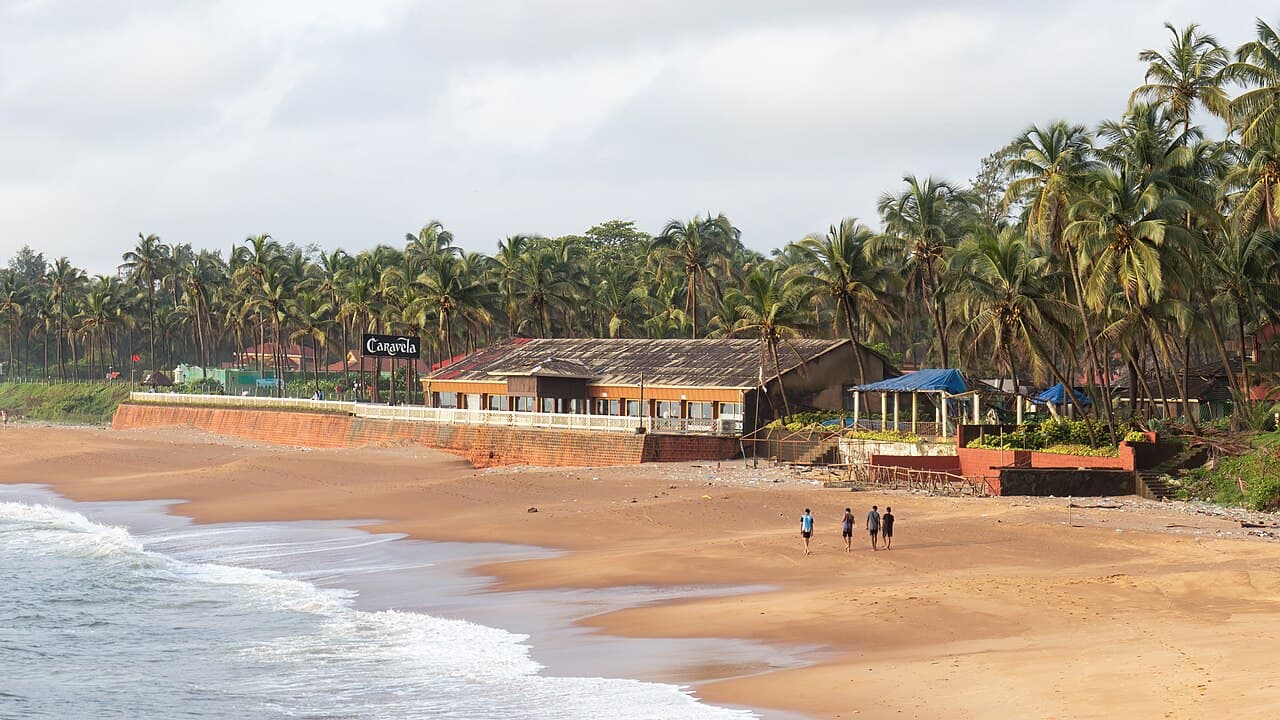
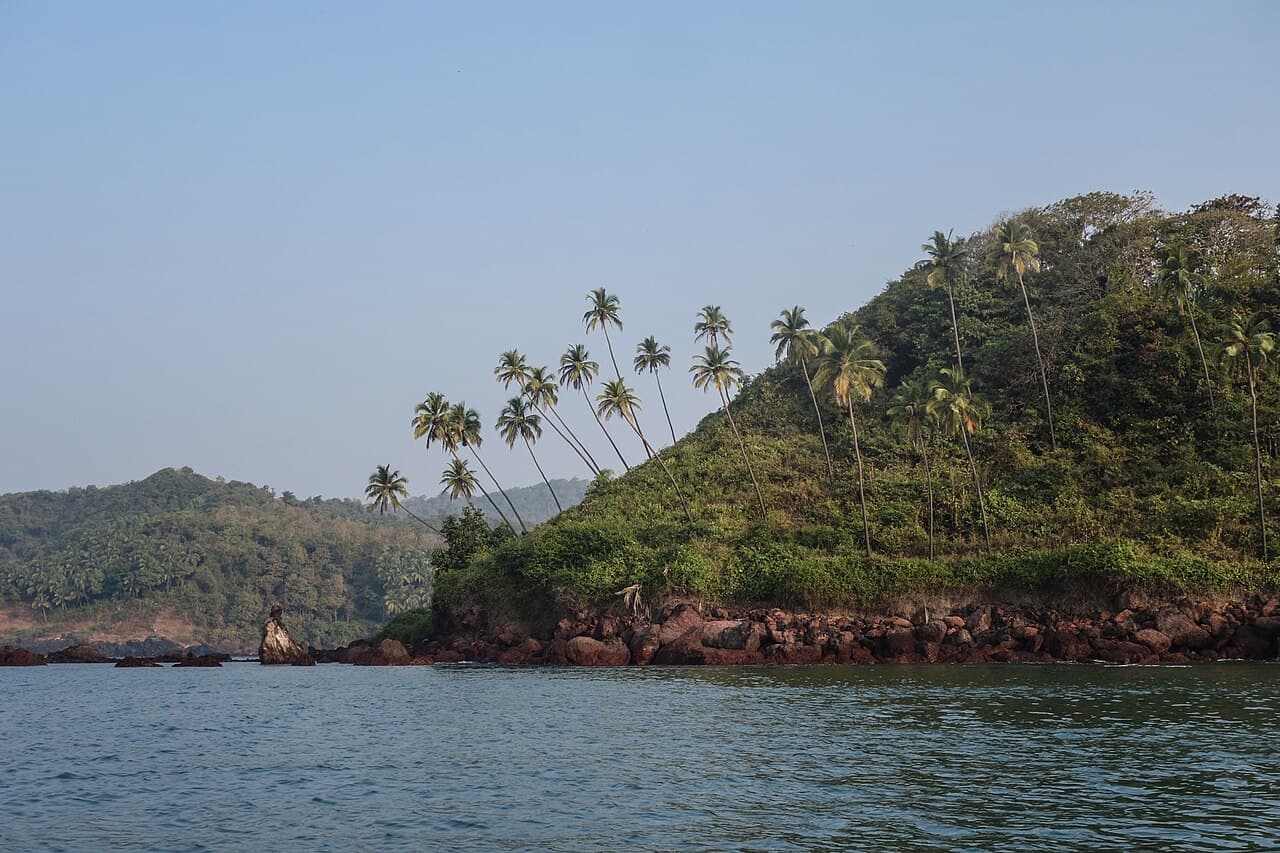
Photo: iMahesh, CC BY-SA 4.0 1Candolim & Sinquerim
North Goa · Bardez, North Goa
The southern end of North Goa's longest beach: busy and well supplied, but a notch calmer than Calangute next door.
Candolim runs south from Calangute to Sinquerim, where the coast ends at Fort Aguada. Sinquerim was the first part of Goa developed purely for tourism, and it is still where much of the watersports activity is. Candolim itself is lined with restaurants, bars and shops, and it tends to draw couples, families and returning foreign visitors.
It is not quiet. It is simply less crowded than Calangute and Baga, with the same easy access to everything in the north. In the monsoon the currents here are strong and the beach loses sand quickly, so it is a dry-season base.
- Best for: First-timers and families who want everything within reach
- Not ideal for: Anyone looking for empty sand or a village feel
- Nearest airport: Mopa
- Vibe: Established, busy, comfortable
Good to know
Stay towards the Sinquerim end if you want to be further from the Calangute crowds.
Source: Goa Experience: North, Central and South Goa, Orange Wayfarer: Beaches in North and South Goa
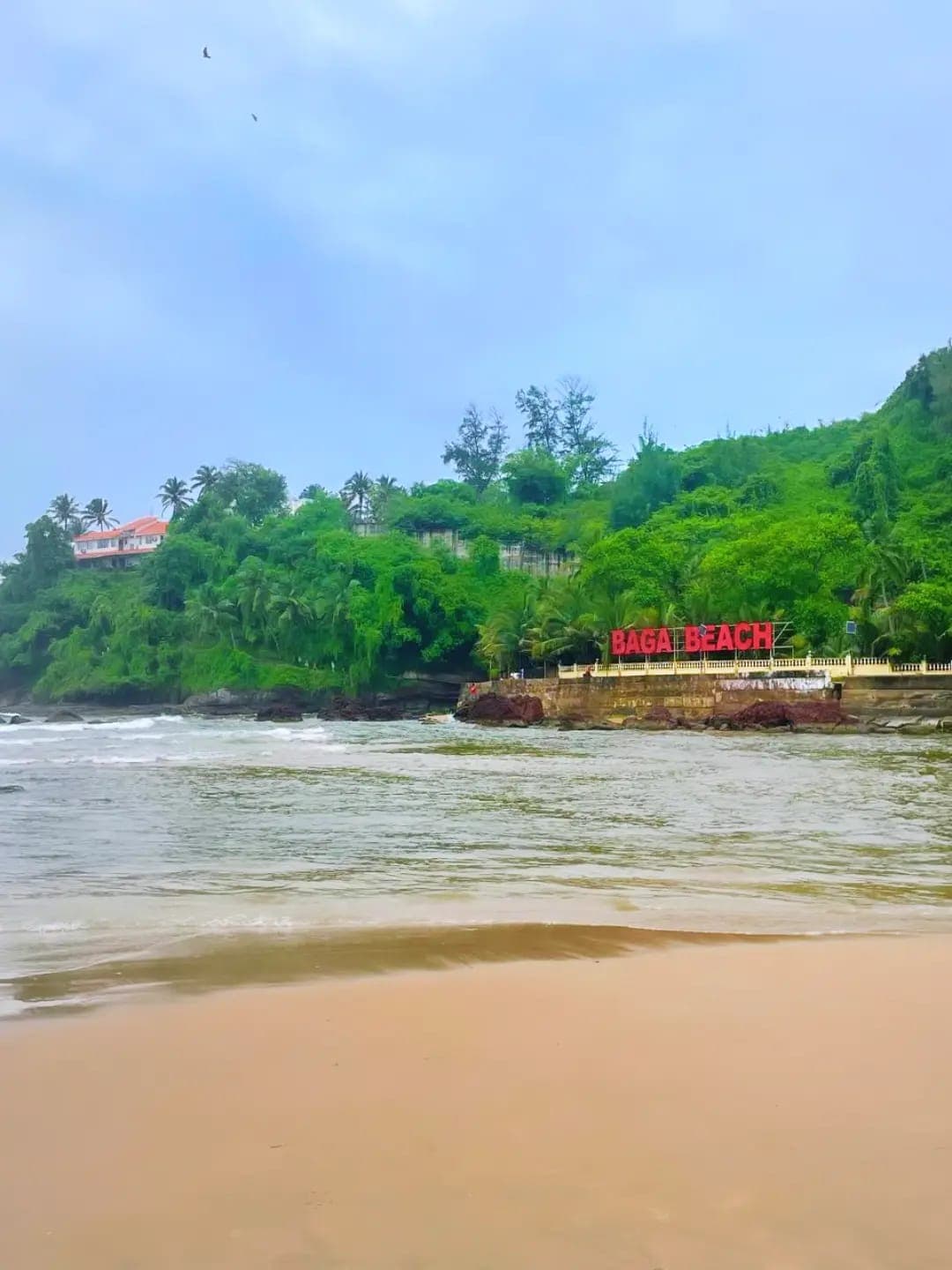
Photo: Vivid mongoose, CC0 2Calangute & Baga
North Goa · Bardez, North Goa
The busiest, most built-up stretch of coast in Goa, with the most choice and the most people.
Calangute has the largest beach in North Goa and Baga continues it to the north. Between them they have the densest spread of restaurants, shops, clubs and watersports in the state, and the Baga end is where the late-night strip is.
The cost is crowds. Peak weeks are Christmas and New Year, and again in May, when the beach, the roads and the lanes behind them are packed. Traffic through Calangute is slow for much of the day, and noise carries late near Baga.
- Best for: Nightlife, shopping and groups who want everything walkable
- Not ideal for: Quiet stays, light sleepers, anyone who dislikes crowds
- Nearest airport: Mopa, about 40 km
- Vibe: Loud, crowded, convenient
“When tourists enter Goa, they head to Calangute. How can we stop anyone from coming to Calangute?”
Joseph Sequeira, Sarpanch of Calangute · O Heraldo, 24 January 2025 Good to know
If you want the convenience without the noise, sleep a few lanes back from the beach, not on the Baga strip.
Source: Wikipedia: Calangute, StayVista: Dabolim vs Mopa airport
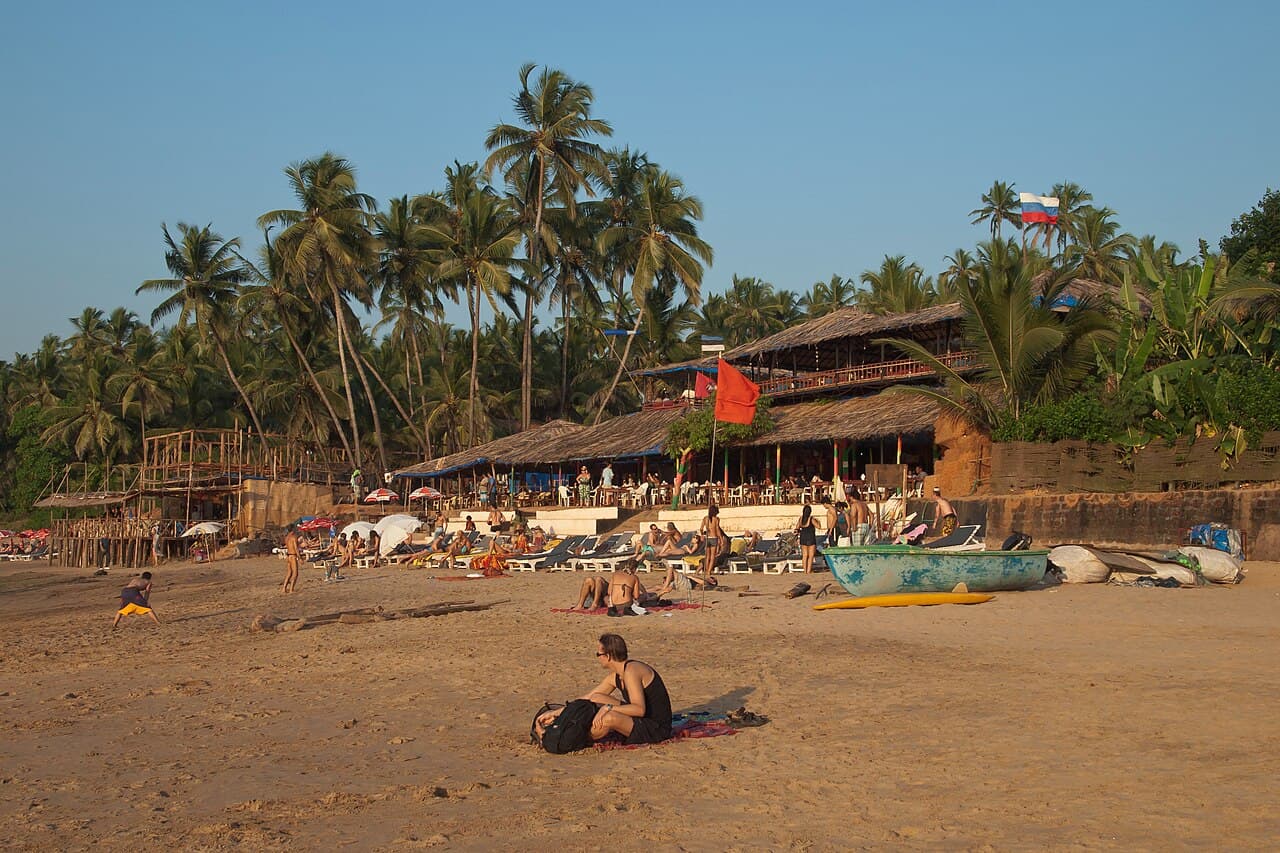
Photo: Vyacheslav Argenberg, CC BY 4.0 3Anjuna & Vagator
North Goa · Bardez, North Goa
Rocky coves, cliffs and the old party coast, now with the Wednesday flea market and a steady nightlife scene.
Anjuna's beach is rocky rather than a long sweep of sand, and it is not the best for swimming. Vagator, just north, is a smaller cove under the cliffs with Chapora Fort above it. Both are known for music venues and late nights, and for the flea market that runs on Wednesdays in season.
Vagator gets crowded for its size, and the scene is less what it was than its reputation suggests. The upside is position: Assagao's restaurants are ten minutes inland and the quieter northern beaches are across the river.
- Best for: Younger groups, nightlife, the flea market
- Not ideal for: Swimming-focused beach holidays, early nights
- Nearest airport: Mopa
- Vibe: Cliffs, cafés and late music
Good to know
Check what is on nearby before booking a house here; sound travels a long way at night.
Source: Orange Wayfarer: Beaches in North and South Goa, Hippie in Heels: Where to stay in Goa
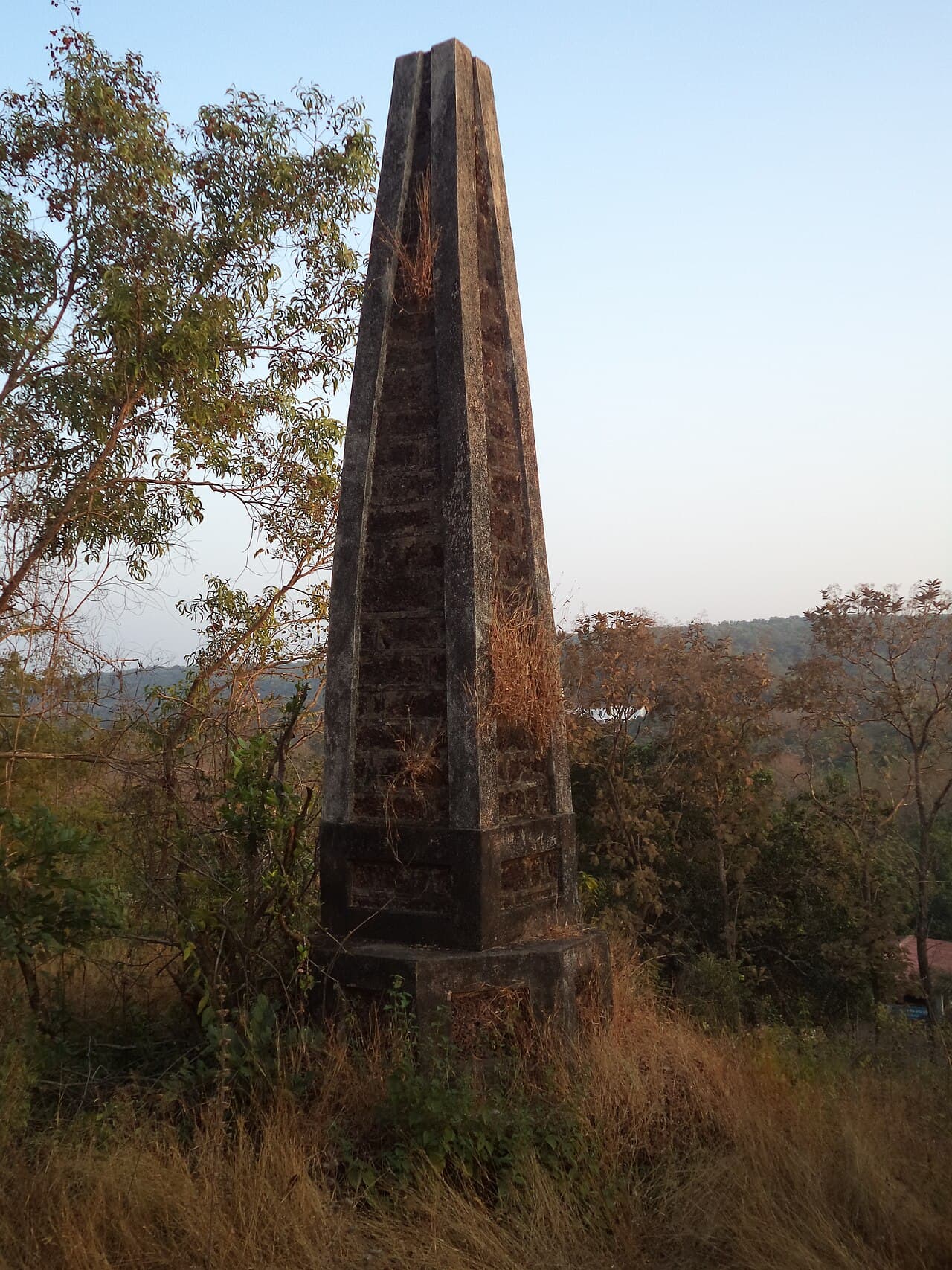
Photo: Gauravi Raikar, CC BY-SA 3.0 4Assagao & Siolim
North Goa · Bardez, North Goa
Green inland villages with old Portuguese houses and much of North Goa's best eating, a short ride from the beaches.
Assagao is a hillside village about four kilometres west of Mapusa, with Anjuna and Vagator beyond it. It is residential, and its small restaurants and shops are the reason people drive in from the coast. Siolim sits on the Chapora river to the north, with Morjim across the bridge.
Neither has a beach of its own, so every beach day involves a scooter or a car. Siolim's roads can be busy with traffic heading to and from the northern beaches. What you get in exchange is space, greenery and quieter nights than anywhere on the sand.
- Best for: Food-led trips, longer stays, villas with room
- Not ideal for: Anyone who wants to walk to the beach
- Nearest airport: Mopa
- Vibe: Leafy, residential, well fed
Good to know
Plan on your own transport; this is the one base where it is essential rather than handy.
Source: Wikipedia: Assagao, Wikipedia: Siolim
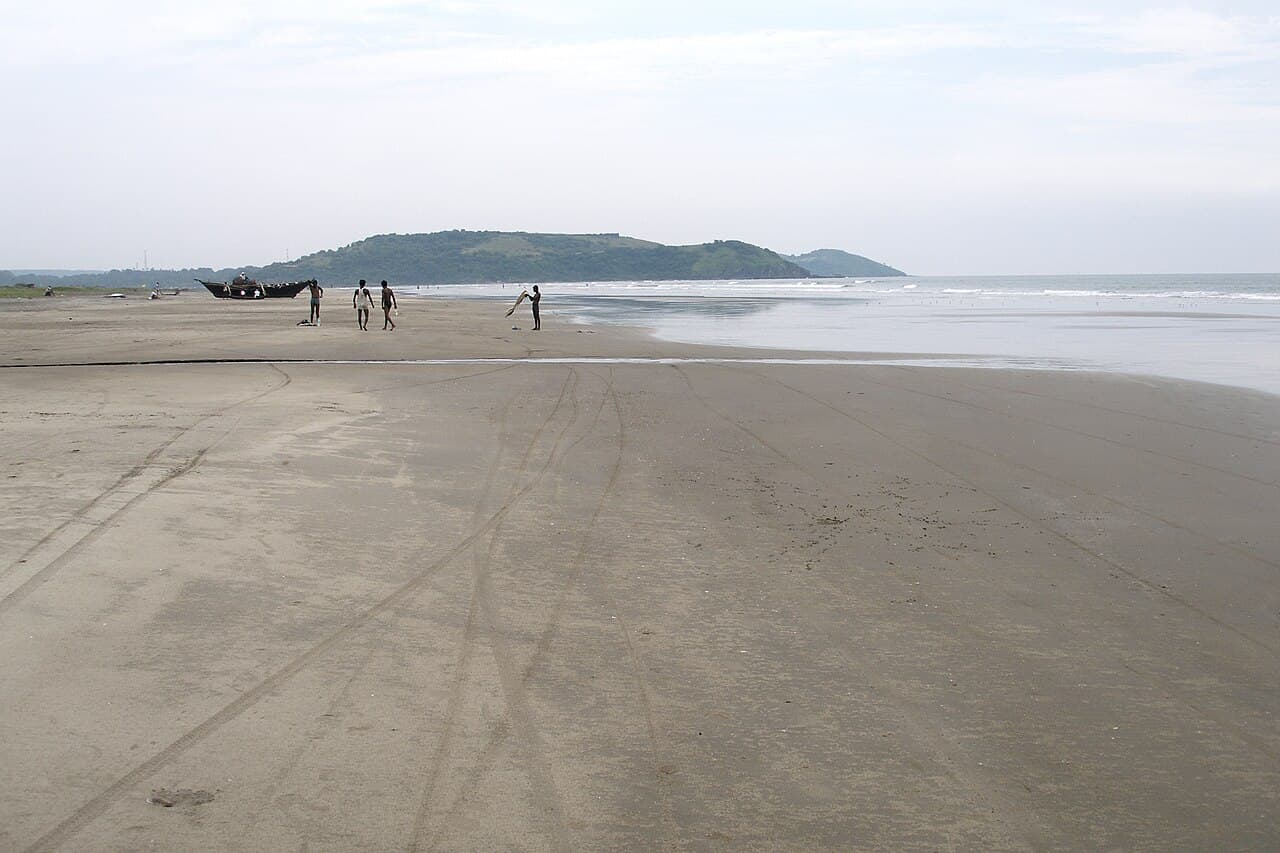
Photo: Vyacheslav Argenberg, CC BY 4.0 5Morjim, Ashwem & Mandrem
North Goa · Pernem, North Goa
A run of wide, quieter beaches north of the Chapora river, getting calmer the further north you go.
Morjim sits on the northern bank of the Chapora estuary, and part of its beach is an olive ridley turtle nesting site. It has beach clubs and gets livelier than it looks. Ashwem has more shacks and restaurants. Mandrem, with a creek running parallel to the sea, is the quietest of the three and has several yoga retreats.
Quiet cuts both ways. There is little late-night life north of Morjim, some beach access involves a walk from where you park, and the restaurants of Assagao are a proper drive away.
- Best for: Couples, yoga, quiet stays still close to Mopa
- Not ideal for: Nightlife on your doorstep
- Nearest airport: Mopa, about 28–32 km
- Vibe: Wide sand, slower pace
“Since this is a turtle nesting site, there cannot be much activity around the place at night.”
Vilas, serving tender coconuts to guests at Morjim beach · Gomantak Times, 14 October 2024 Good to know
At Morjim, keep clear of any marked turtle nesting area; it is protected, not a viewing spot.
Source: Wikipedia: Morjim, Wikipedia: Mandrem
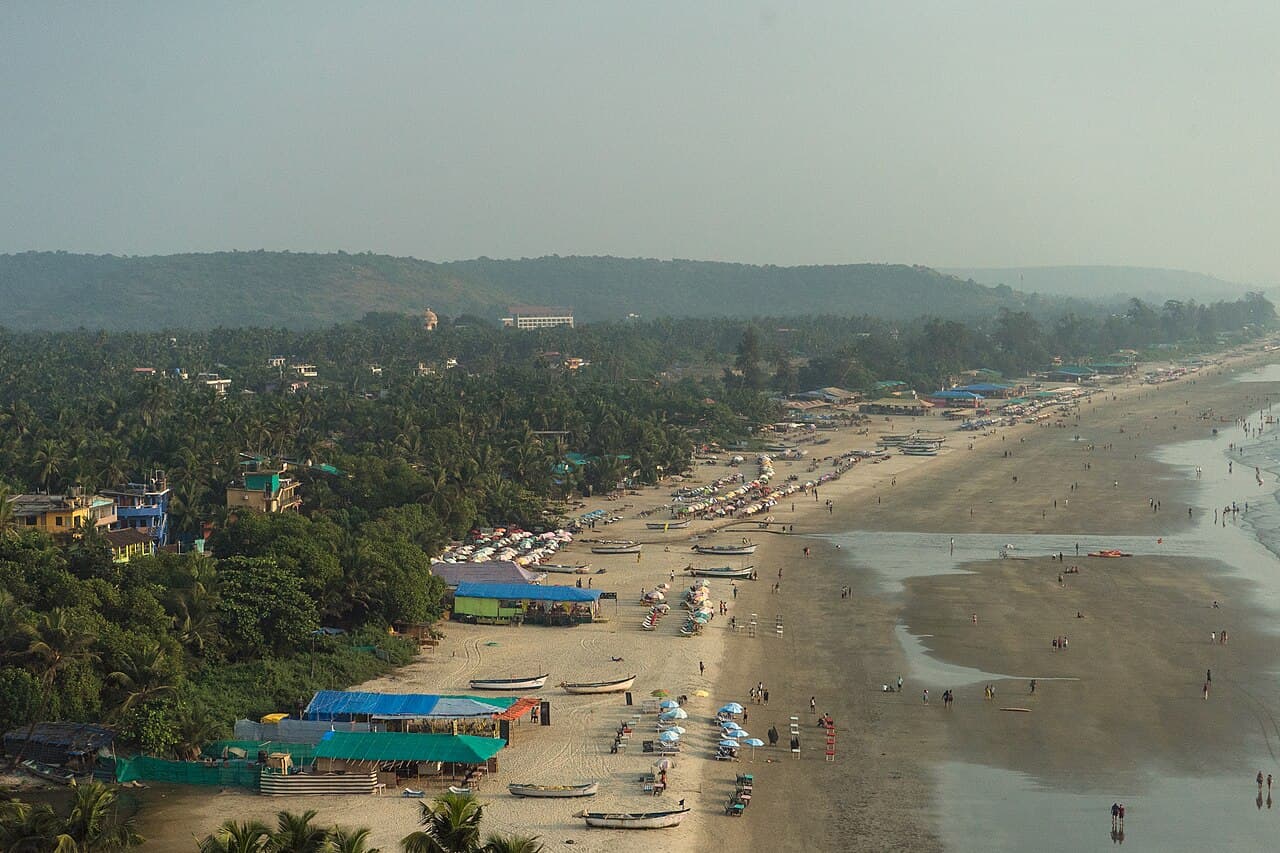
Photo: Alexey Komarov, CC BY-SA 4.0 6Arambol
North Goa · Pernem, North Goa
A fishing village at the top of the coast, known for its drum circles at sunset, yoga and a long-staying traveller crowd.
Arambol has kept more of the old backpacker Goa than anywhere else on the coast, with evening drum circles on the beach, yoga and alternative therapies, and a freshwater lake a walk away. Strong winds in season make it a spot for paragliding and kitesurfing.
The village is busy in season with tourists, backpackers and expats, and it is the far end of the state. Palolem is around three hours away by road, and most of North Goa's restaurants are a long ride south.
- Best for: Backpackers, long stays, yoga, sunsets
- Not ideal for: Families wanting polish, trips centred on the south
- Nearest airport: Mopa, about 30 km
- Vibe: Bohemian, informal, sociable
Good to know
If you are flying into Dabolim, Arambol is close to the worst possible base; check your airport first.
Source: Wikipedia: Arambol, StayVista: Dabolim vs Mopa airport
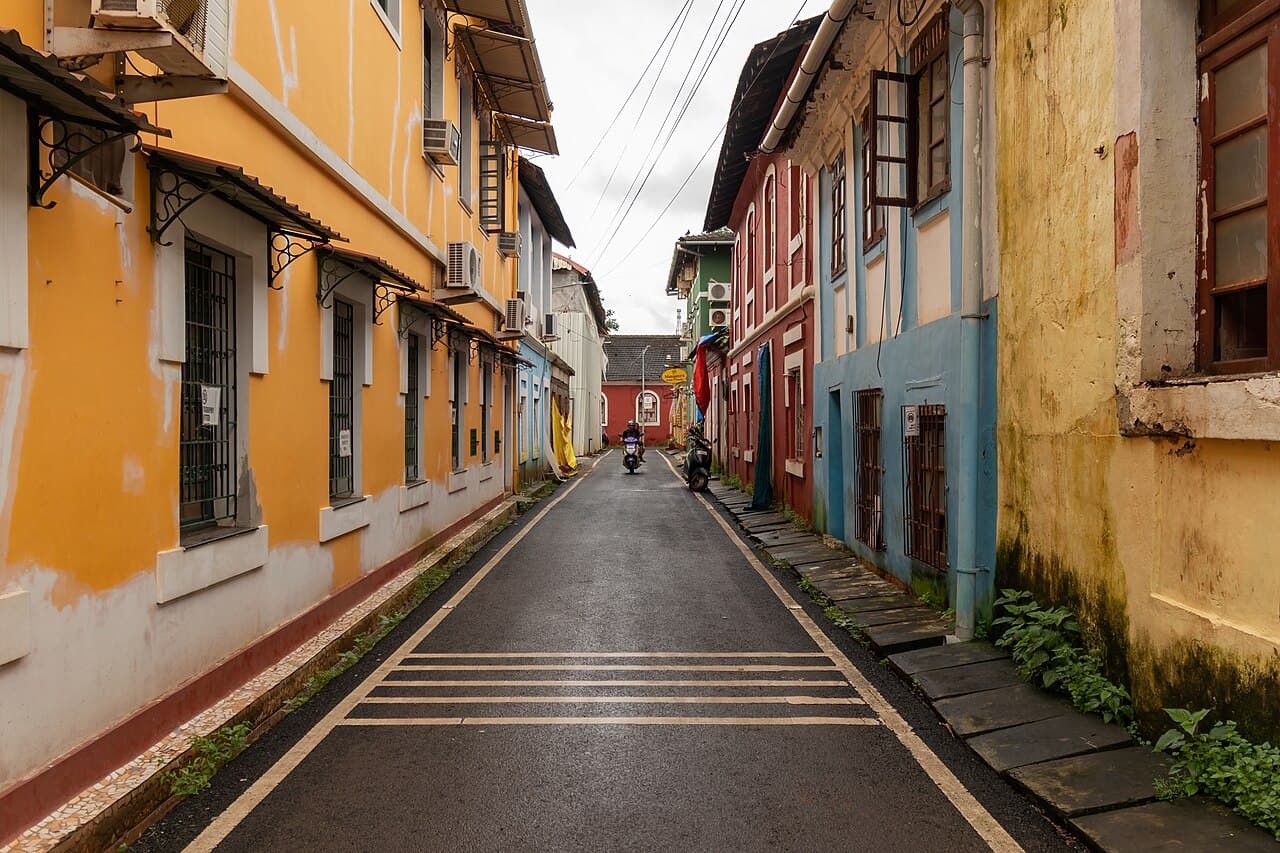
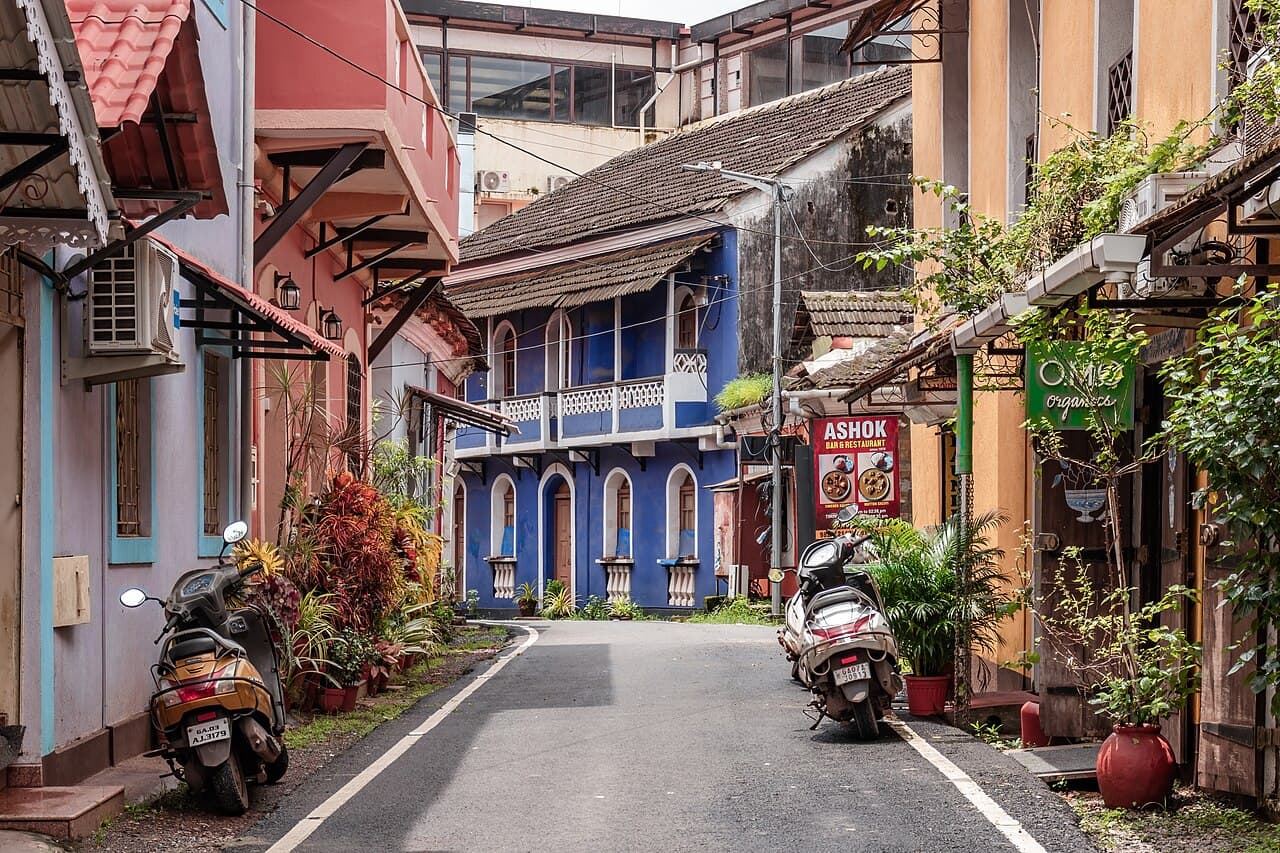
Photo: iMahesh, CC BY-SA 4.0 7Panjim (Panaji)
Central Goa · Tiswadi, Central Goa
The capital on the Mandovi river: a city base for heritage, food and getting to both ends of the state.
Panjim is the one base that is not about a beach. The Latin Quarter of Fontainhas is walkable, Old Goa's churches are a short drive east, and the city sits between the two airports, which makes it a sensible first or last night.
It is a working city, with the traffic and parking problems that come with that. Miramar, the city beach, is crowded and mostly used by locals, and the casino boats on the river are part of the view.
- Best for: Heritage, food, short trips, a stop between north and south
- Not ideal for: A beach holiday
- Nearest airport: Dabolim, about 30 km; Mopa is about 40 km
- Vibe: Old town and working city
“I understand that they are on holiday mode and I never stop them from taking pictures outside my house. Infact, I tell them, ‘Take your pictures, but don’t lean against the wall.’”
Jessy Abreu, senior citizen and resident of Fontainhas · Gomantak Times, 16 October 2024 Good to know
If you have a car, ask your host about parking before you arrive; street parking near Fontainhas is very hard.
Source: Wikipedia: Panaji, Hippie in Heels: Where to stay in Goa
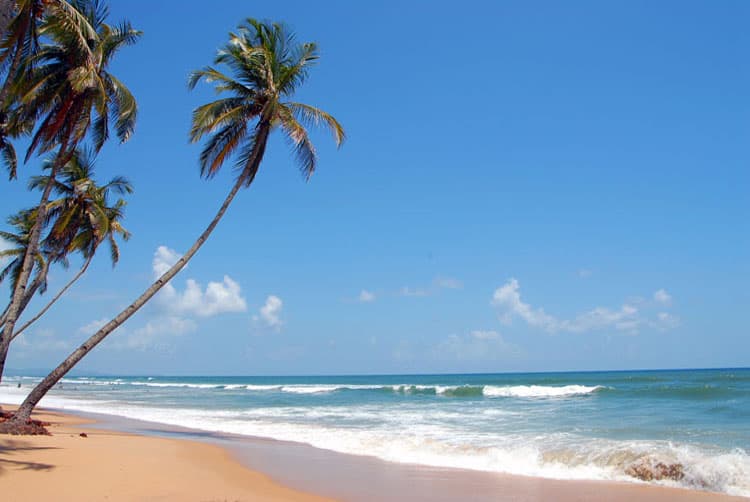
Photo: Portugal Editor Exploration, CC BY-SA 4.0 8Colva, Benaulim & Varca
South Goa · Salcete, South Goa
Part of one long sandy coastline south of Margao, running from busy Colva to quiet, resort-lined Varca.
Colva is the liveliest of the three and is crowded much of the time, mostly with domestic visitors. Benaulim, directly south, has a large, easy-to-reach beach with watersports and a fishing-village feel. Varca is quieter still, with long sand, evening walkers and relatively few places to eat out.
This is the most practical part of the south: close to Margao and its railway station, and the nearest beach base to Dabolim. It is not the prettiest part of South Goa, and north Goa's restaurants are too far to use.
- Best for: Families, short trips via Dabolim, a choice of busy or quiet
- Not ideal for: Nightlife, or anyone arriving at Mopa
- Nearest airport: Dabolim, about 23–28 km to Colva
- Vibe: Local, relaxed, long beach
Good to know
Pick Colva for things to do and Varca for quiet; Benaulim is the middle ground.
Source: Wikipedia: Colva, Wikipedia: Benaulim
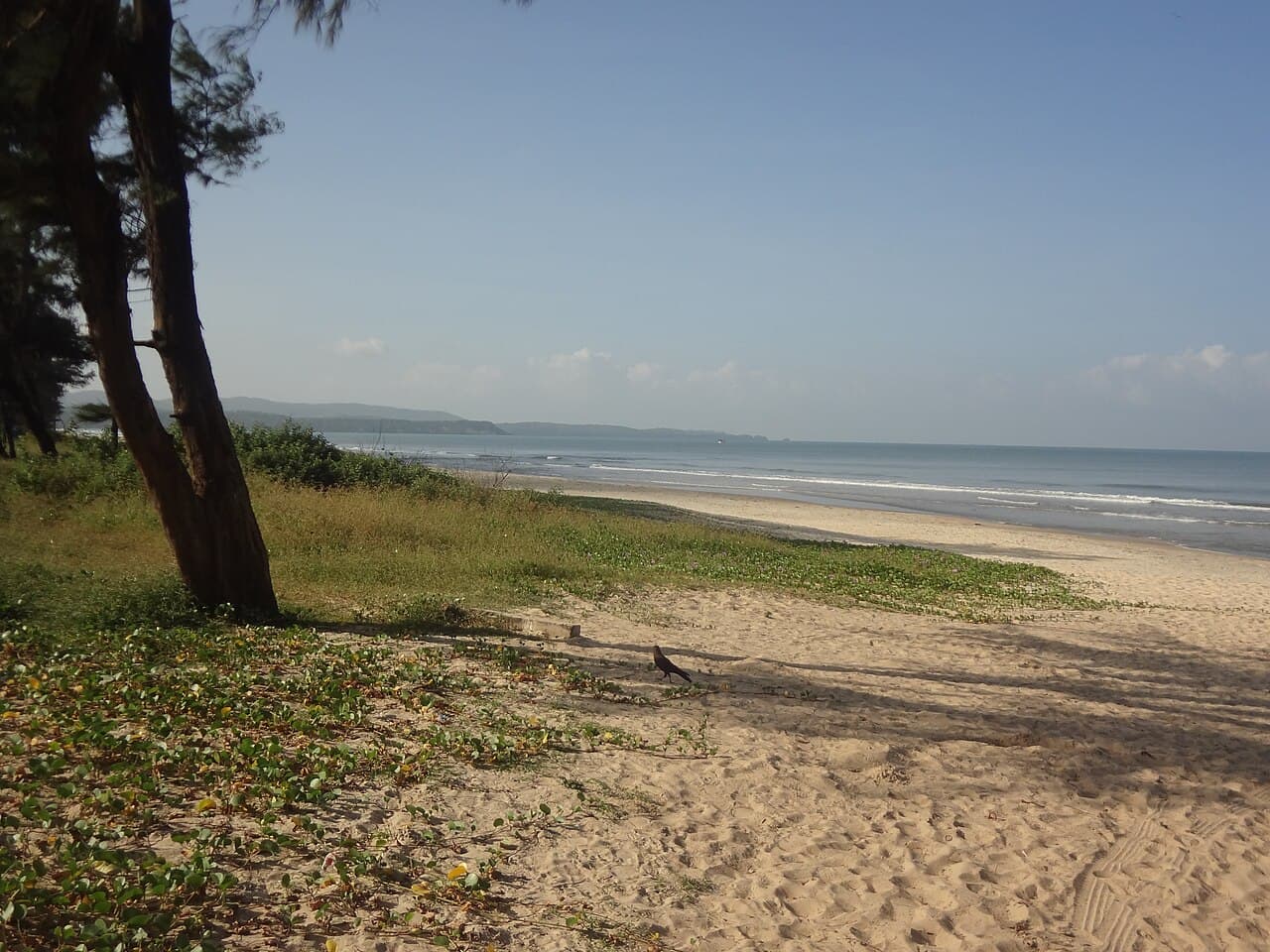
Photo: Charan kumar kuppala, CC BY-SA 3.0 9Cavelossim & Mobor
South Goa · Salcete, South Goa
The southern tip of the long Salcete beach, where the Sal river meets the sea: clean sand, big resorts and not much else.
Cavelossim is about 15 km south of Margao, and Mobor runs on to the point where the Sal river reaches the sea. The beaches are wide and clean, with shacks and watersports, and large resorts sit behind much of the sand.
Outside those resorts there is limited life, especially after dark. It is a place to stay put rather than explore from, and the north is a long day's drive away.
- Best for: Families and couples who want a calm beach and few decisions
- Not ideal for: Independent eating out, nightlife, exploring the north
- Nearest airport: Dabolim, about 30–45 km
- Vibe: Calm, spacious, resort-led
Good to know
Stock up in Margao on the way in; shops close to the beach are limited.
Source: Wikipedia: Cavelossim, StayVista: Dabolim vs Mopa airport
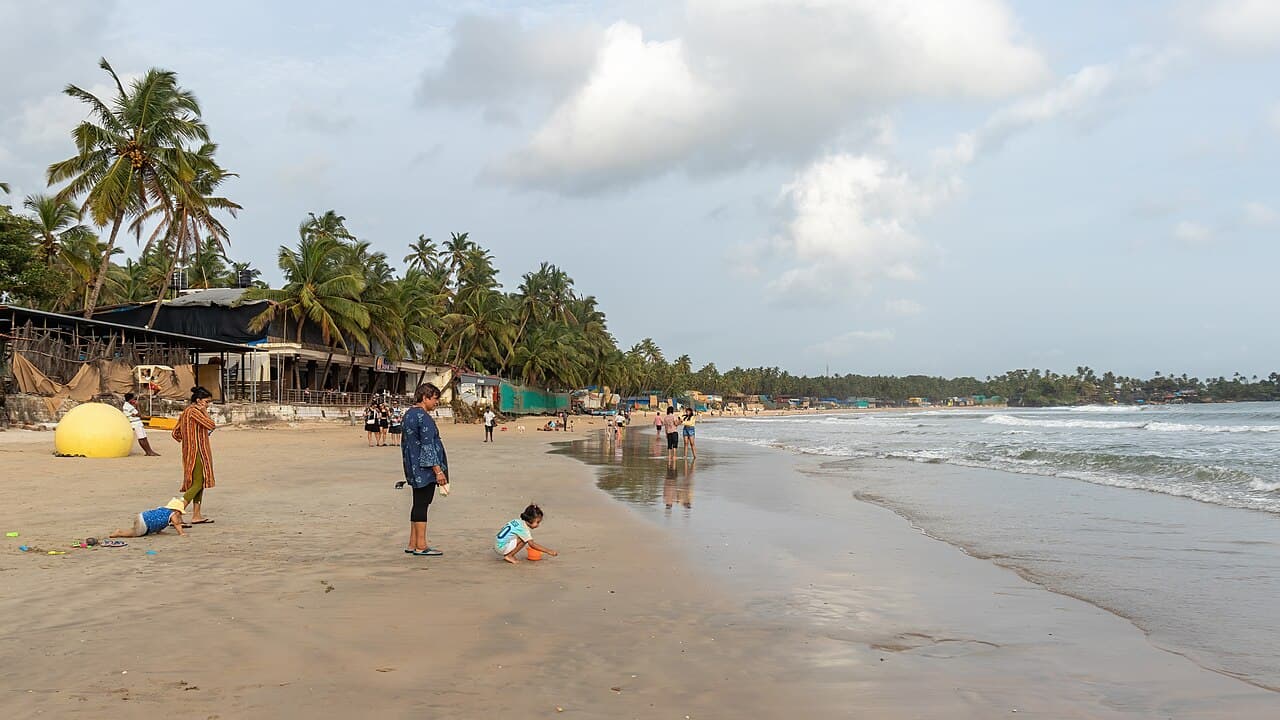
Photo: iMahesh, CC BY-SA 4.0 10Palolem & Agonda
South Goa · Canacona, South Goa
Goa's best-known crescent bay and its quieter neighbour to the north, at the far southern end of the state.
Palolem is a sheltered crescent of sand with rocks at both ends, and the water deepens gently from the north end, which makes it one of the calmer swims in Goa. It is the most developed beach in the south and busy in season. Agonda, about fifteen minutes north, is a longer, emptier beach with one lane behind it and a turtle nesting area at its southern end.
Both are a long way from everything else: Palolem is about 65 km from Dabolim and roughly two hours from Panjim. The pay-off is that this is the south at its most relaxed, and the shacks are up from roughly November to March.
- Best for: Slow beach holidays, swimming, several nights in the south
- Not ideal for: Day trips from the north, arrivals at Mopa
- Nearest airport: Dabolim, about 65 km
- Vibe: Palm-lined, unhurried
Good to know
Choose Palolem for the calmer water and more to do, Agonda for space and quiet.
Source: Wikipedia: Palolem, Global Gallivanting: Best places to stay in Goa
Frequently asked questions
Should I stay in one base or two?
For a week or more, two. Stay in the north for most of it and move south for the last two or three nights. Driving from one end to the other and back in a day costs you the best hours at both.
How many days do I need?
Four or five days is enough for one area done properly. If you want both the north and the south without spending the trip in a car, allow a week.
Does the area matter in the monsoon?
Less than in season. From June to September most beach shacks are down, swimming is dangerous and many north Goa restaurants close for a break. Inland villages such as Assagao, and Panjim, hold up better than beach-only bases.
Do I need a scooter?
In Calangute, Baga or Palolem you can manage on foot and taxis. Almost everywhere else, including Assagao, Siolim and the northern beaches, you will want a scooter or a car. Carry a licence that covers a two-wheeler and wear a helmet.
The Cocosnest team · facts checked September 2026. Timings, fees and venues change without notice, so confirm before a long drive.
Places in this guide
Reviews & comments
No comments yet. Be the first.
Reviews open soon.