 Coco's Nest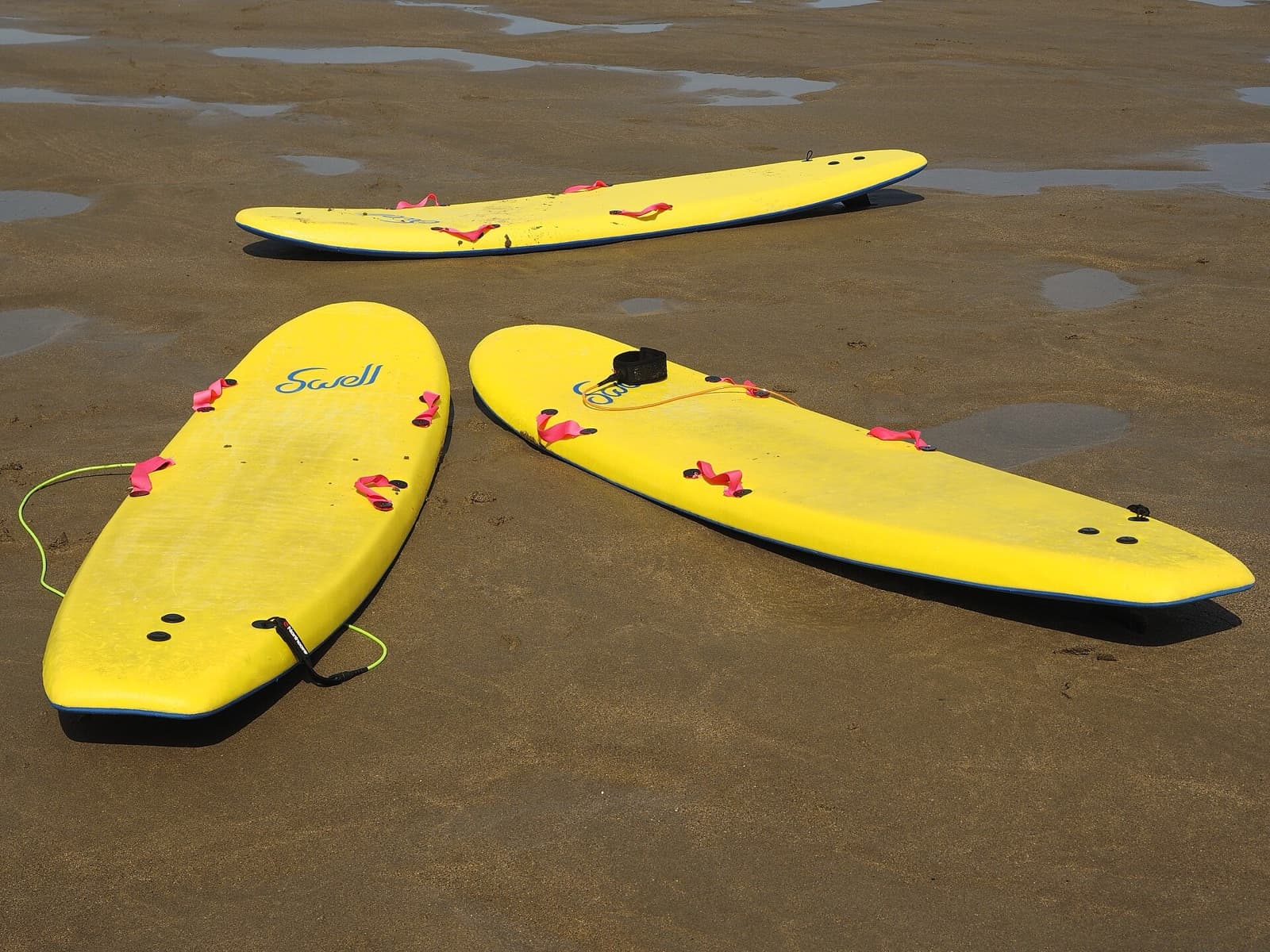
Photo: Andy Beecroft, CC BY-SA 2.0
Surfboard, soft-top 8ft
Forgiving board for learning. Leash and wax included.
Starting from
₹600per day
Your host confirms the final price for your dates before anything is booked.
₹3,000 refundable deposit, collected at handover and returned at the end.
4 available
No payment now. We call you to confirm and book.
What comes with it
- Leash
- Wax
Please note
- Not for use when a red flag is flying
About the Surfboard, soft-top 8ft
An 8 ft soft-top, or foam, surfboard is the standard board for learning to surf. The soft foam deck is forgiving if you fall on it or it hits you, and its length and volume make it stable and buoyant. That makes paddling, catching small waves and standing up much easier than on a shorter hard board. A leash and wax are included.
Goa's waves are usually small and gentle, which suits beginners. Surf schools generally treat October to November as the most consistent period, December to April as smaller and gentler, and May as bigger before the monsoon. Some weeks can be completely flat. North Goa beaches such as Arambol, Ashwem, Mandrem and Morjim are popular with learners.
From June to September, Drishti Marine, the lifeguard agency, puts red flags on Goa's beaches and advises against going in the sea during the monsoon. Never take the board out when a red flag is flying.
Highlights
- 8 ft soft-top foam board, forgiving for beginners
- Stable and buoyant, so waves are easier to catch
- Leash and wax included
- Suits Goa's generally small, gentle waves
- Not to be used when a red flag is flying
Tips for using it in Goa
- If you are new to surfing, take a lesson with a local surf school first. They can show you where and when it is safe to paddle out.
- Always wear the leash, so the board stays with you rather than washing into other people.
- Mid tide usually works best on the gentle North Goa beach breaks. Stay clear of rocks and river mouths, where currents and boats are common.
- Stay out of the water whenever a red flag is up, and follow lifeguard instructions.
- Keep the board in the shade when you are not using it, and rinse the sand off at the end of the day.
Common questions
When is surf season in Goa?
Roughly October to May. Surf schools generally find October and November the most consistent, with smaller, gentler waves from December to April. From June to September the monsoon brings rough seas, and Drishti lifeguards red-flag the beaches.
Which beaches are good for beginners?
Arambol, Ashwem, Mandrem and Morjim in North Goa are all popular learner spots with gentle beach breaks. Conditions change daily, so check with lifeguards or a local surf school.
Can I surf during the monsoon?
No. From June to September, Drishti Marine advises people not to go in the sea, and red flags are placed along the beaches. The board must not be used when a red flag is flying.
Do I need a wetsuit?
No. The water in Goa is warm all year. A rash vest and reef-safe sunscreen help with sun and board rub.
Why a soft-top rather than a hard board?
Soft-tops are safer and more forgiving when you fall, and a long, high-volume board like this one is stable and catches waves easily. Beginners usually progress faster on one.
Product details from: Salty Soul Surf Shack: Surfing in Goa season guide, The Surf Atlas: Goa surfing guide, Vianaar: Surfing in Goa, itsgoa: Drishti monsoon advisory, Lapoint: How to pick a soft-top surfboard for beginners. Specifications vary by unit and model year; ask your host if a detail matters to you.
Reviews
No reviews yet. Be the first.
Reviews open soon.